




In a year defined by grief, anger, and an urgent demand for accountability, MASKAN emerges as more than an art exhibition; it is a reckoning. Curated by Thayu in collaboration with Creatives Garage and Usikimye, this immersive, multi-sensory installation faces one of Kenya’s most harrowing social crises: the rising cases of femicide.
Rooted in Swahili, maskan means “home”, a place of refuge, warmth, familiarity. Yet in this exhibition, the word is turned inside out, revealing the painful irony that for many Kenyan women and girls, the spaces meant to protect them have become dangerous, deadly sites. Bedrooms, living rooms, apartments, matrimonial homes; places where safety is assumed, have increasingly become the backdrop of violence. In calling the work MASKAN, the artist asks: What does it mean when home is the most unsafe place?
Premiering in August at Creatives Garage in Westlands, the work ran for three weeks before embarking on a city-to-city tour through Nakuru, Kisumu and Mombasa between October and November 2025. In these cities, audiences walked through a structure infused with memory: silent names, empty spaces, recorded voices, haunting visual metaphors. The installation is less a gallery and more a threshold, where feeling the weight of women whose names are recalled, their dreams interrupted.
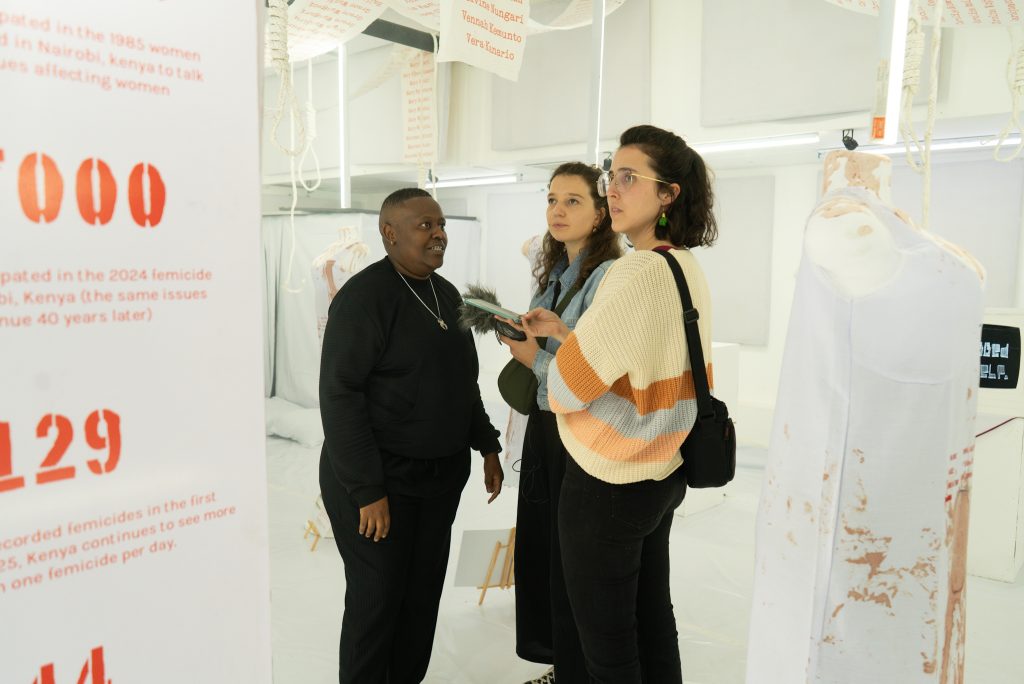

This December, MASKAN occupies Alliance Française from the 5th to 11th, marking the global 16 Days of Activism against Gender-Based Violence. Its placement in this period is intentional: it insists that commemoration must come with confrontation.
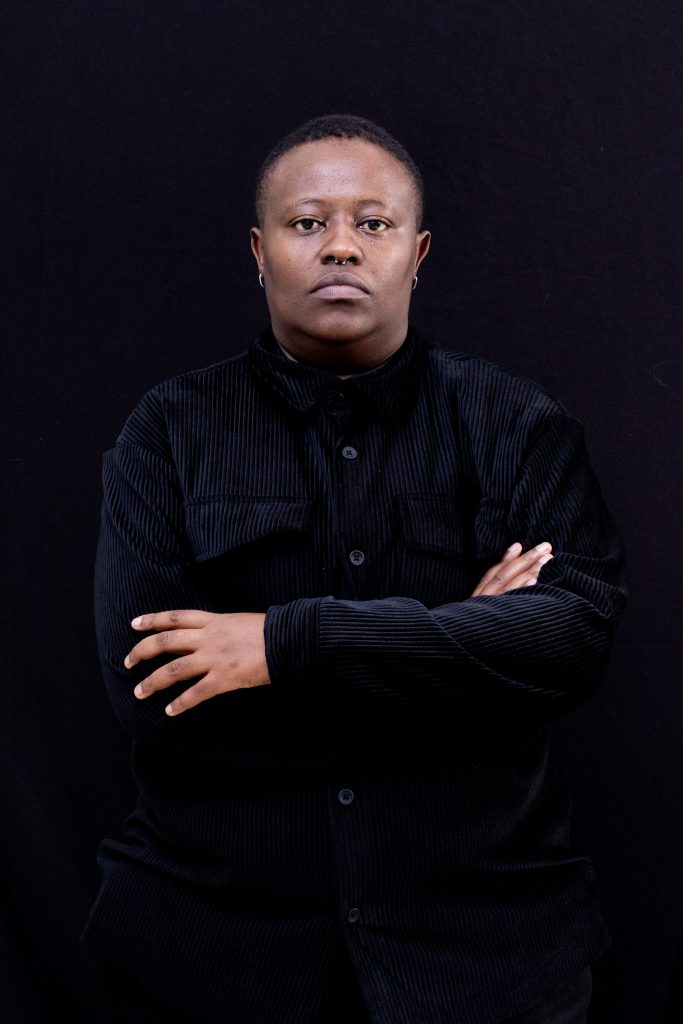
“My intention was to humanize the women we have lost and remind us that they were here,” Thayu says. Their statement becomes the spine of the exhibition: “As an artist, I am drawn to memory—not the sanitized kind, but the messy, raw kind. MASKAN is built from memory, a house haunted by names we once knew. I also wanted to hold space for those who remain, carrying unbearable grief and unheard rage.”
This is not just remembrance, it is resistance. It is a refusal to allow women’s deaths to disappear into hashtags, headlines, files, or the forgetting that follows news cycles. The installation pleads for a communal pause, a witnessing, and an emotional and political response.
MASKAN functions like a ritual house. Visitors engage with visuals, sound, text, and haunting traces of domestic life. The stillness sits with the violence. Ordinary objects are transformed into testimony. This sensory layering forces reflection: Who were these women? How did we fail them? What does a country do with the ghosts it keeps producing?
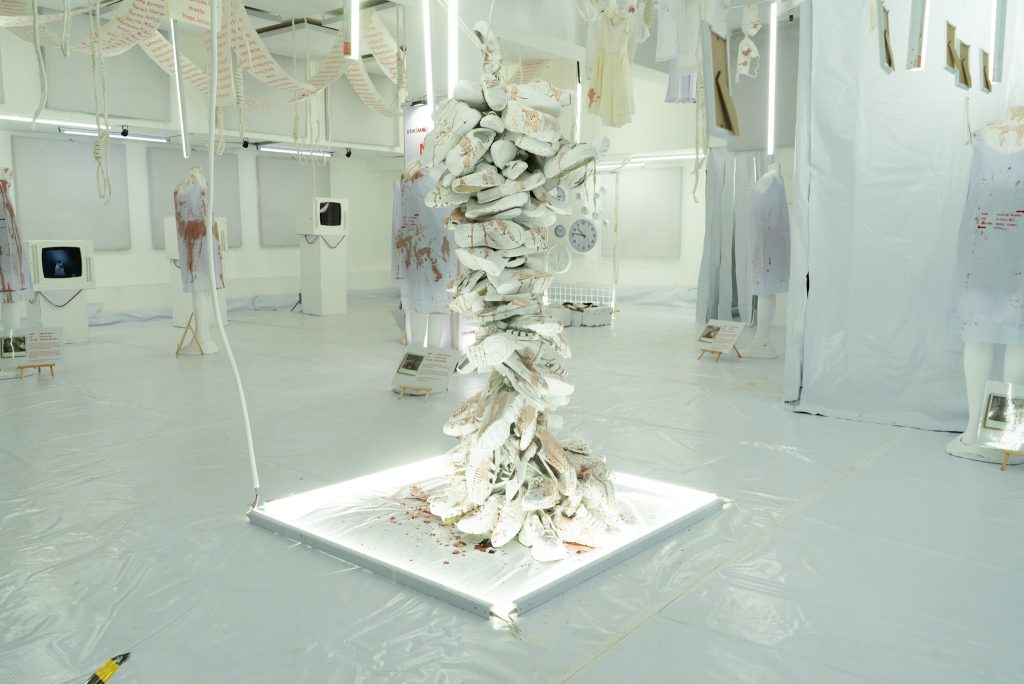
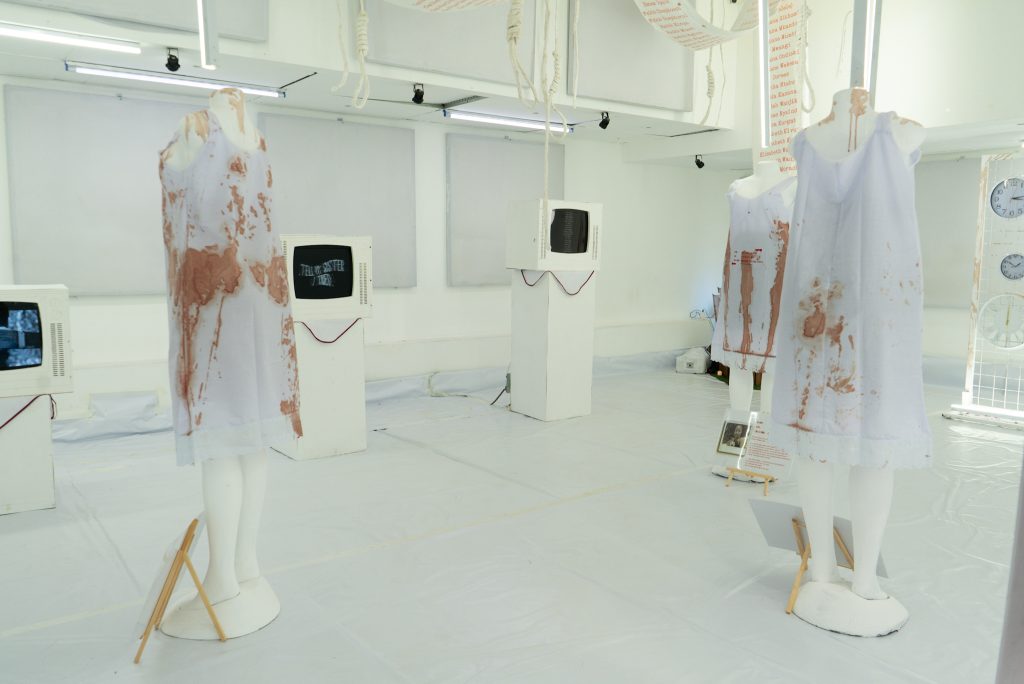
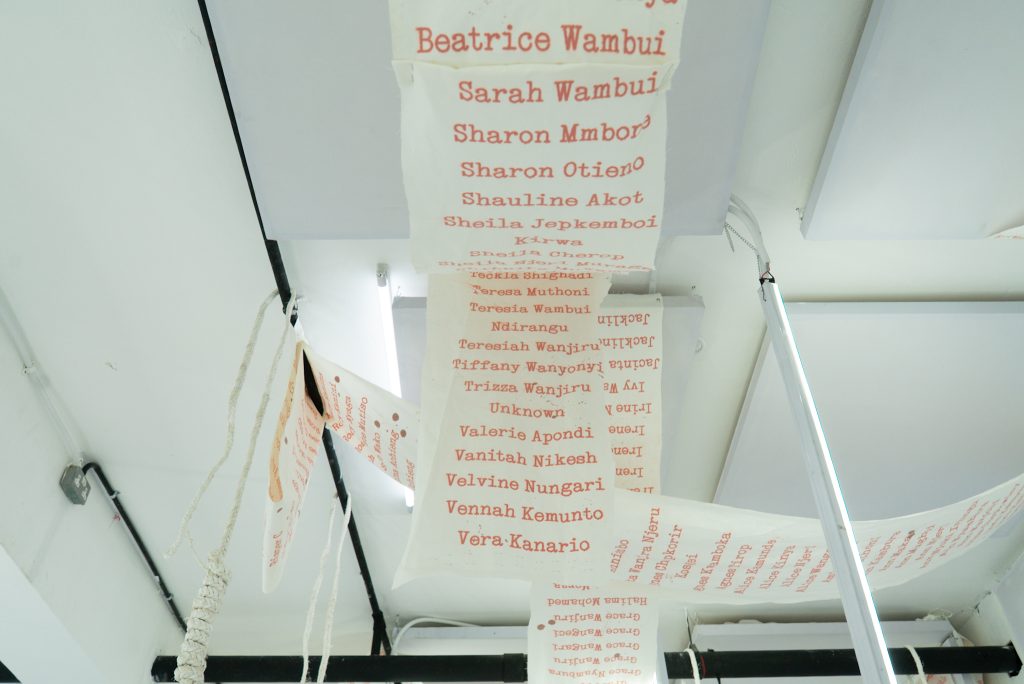
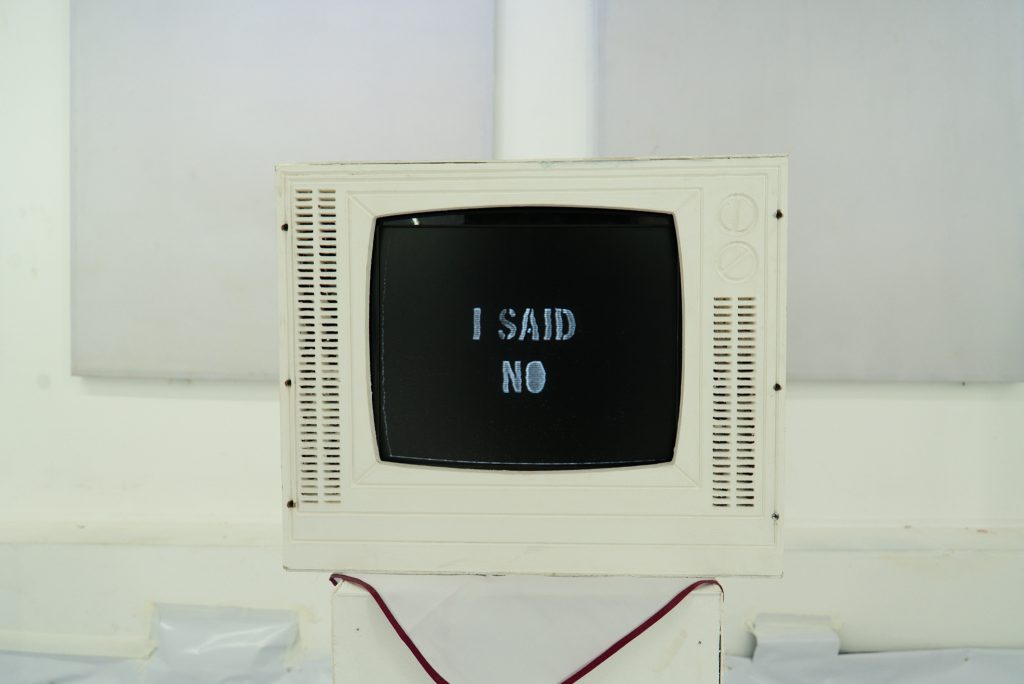
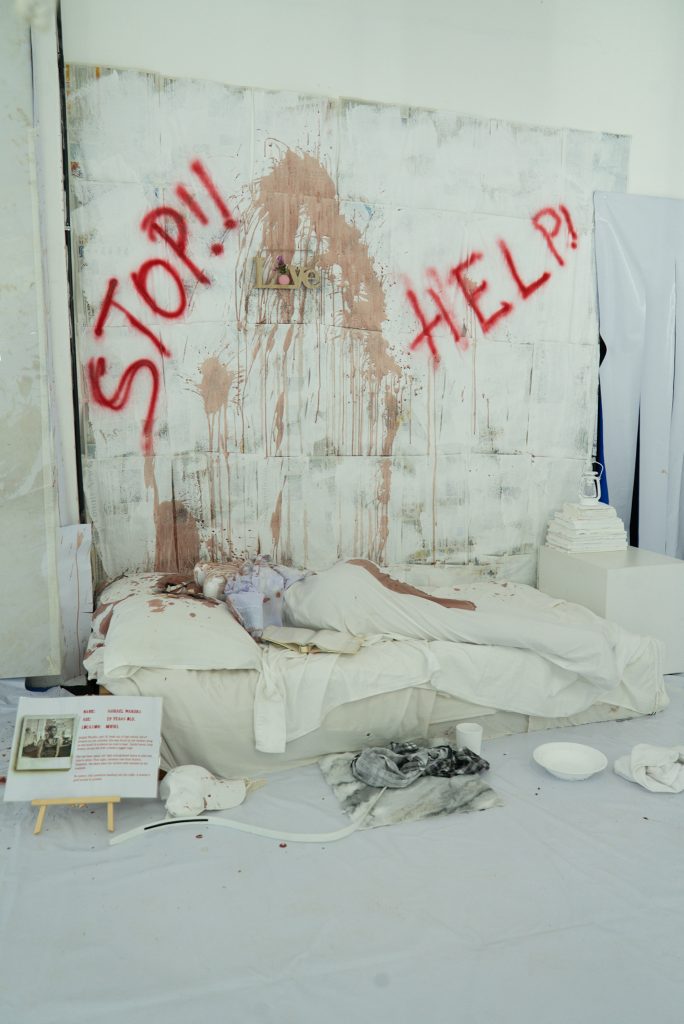
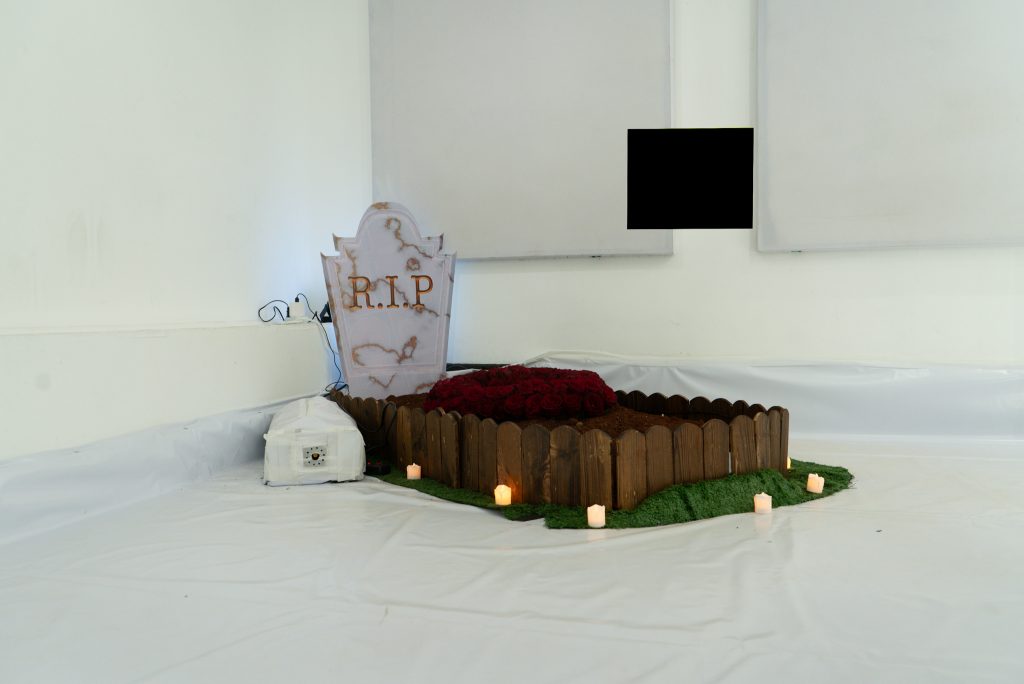
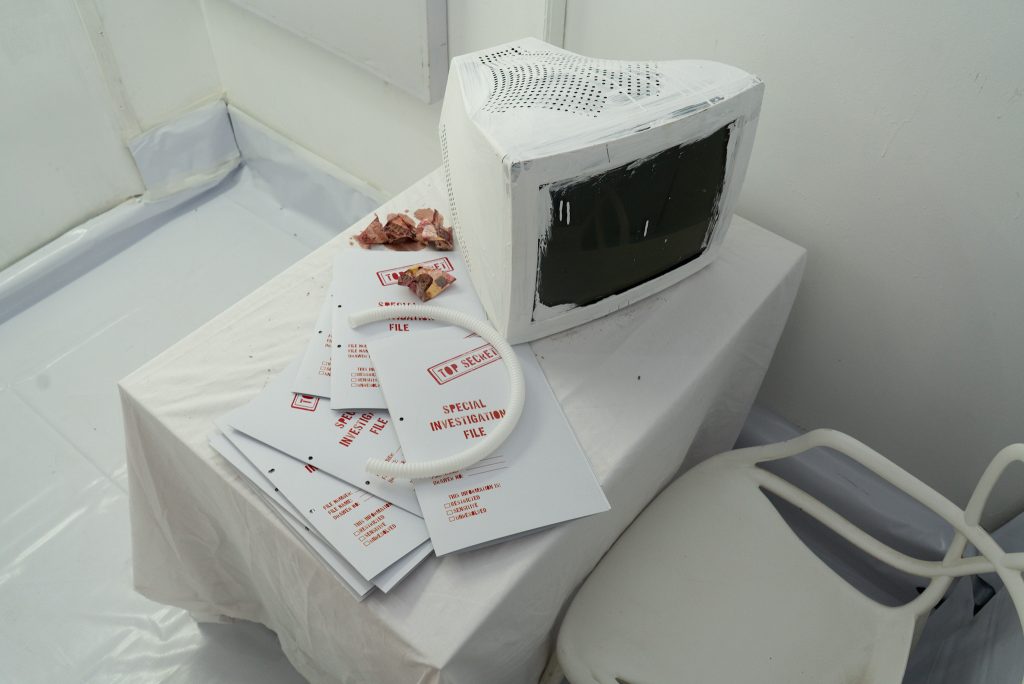
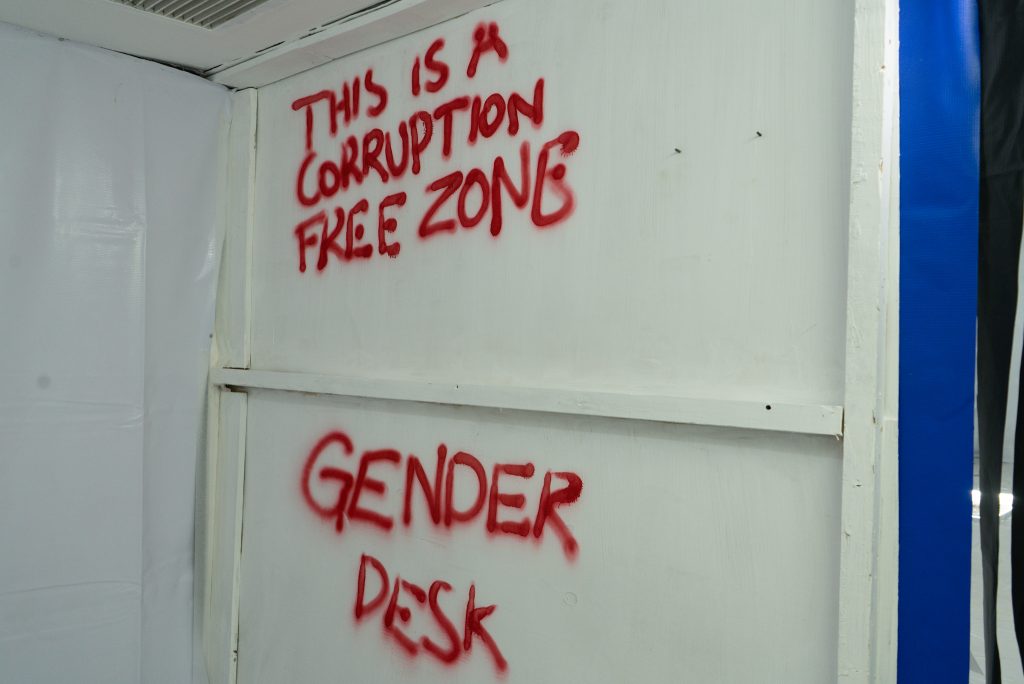
Across cities, audiences have reacted with tears, silence, spontaneous prayer, long conversations, and even exhaustion. That exhaustion is part of the point as violence fatigues the spirit, but so does apathy. It reveals how deeply normalized gendered violence has become, how numbness has replaced outrage, how women live negotiating danger in intimate spaces. It also underscores the emotional labour women carry: grief without justice, fear without institutional protection, rage without space to voice it.
In placing this installation in public spaces, moving it from city to city, the curators enlarge the space to remember, to rage, to feel, to ask what justice and safety should look like. MASKAN’s journey marks a growing movement of artists confronting femicide through cultural expression. As it opens at Alliance Française, the installation returns to Nairobi at a moment when gender violence protests, advocacy campaigns, and media narratives are colliding with political silence. By carving room for mourning, MASKAN insists that memory must be noisy, uncomfortable, and public, because women did not die quietly, and we should not grieve quietly either.